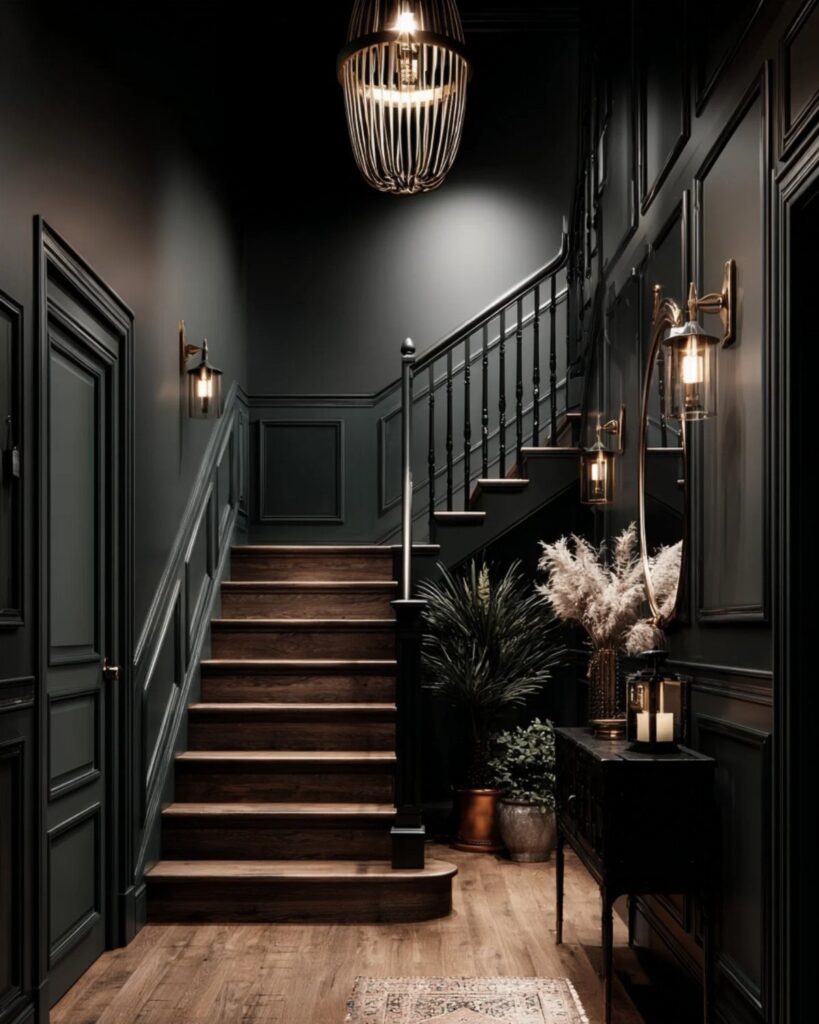
Dark wood in this list runs from dining tables and cabinets to flooring and full paneling, so how much light your room already gets decides where to start.
A room with large windows can carry paneling, while one with little daylight does better with a dark dining table or desk, plus lamps and light walls around it.
1. Dark Wood with Warm Tones
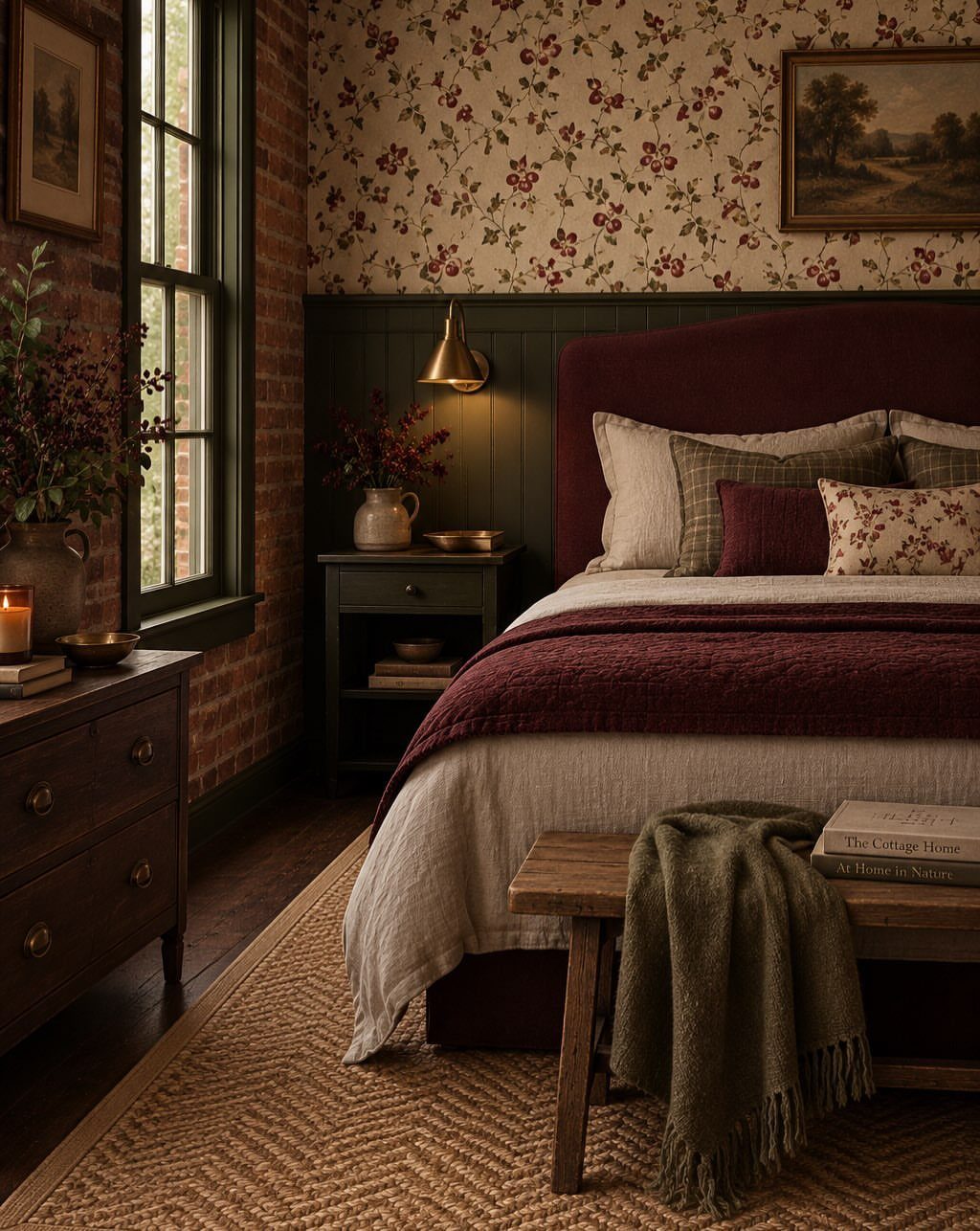
Burgundy against dark wood works because both sit in the same warm, deep family, so nothing fights. The dresser and bench read as one dark mass, and the red headboard and floral wallpaper add color without breaking the mood.
I like a natural fiber rug, like the jute underfoot, to keep all that depth from feeling heavy. Pick one warm color for the bedding and let the wood stay the anchor.
Helen Moore, director of marketing at Benjamin Moore, agrees. ‘Dark brown woods or accents paired with a rich burgundy will bring a rustic warmth to any room.
2. Dark Wood Dining Tables
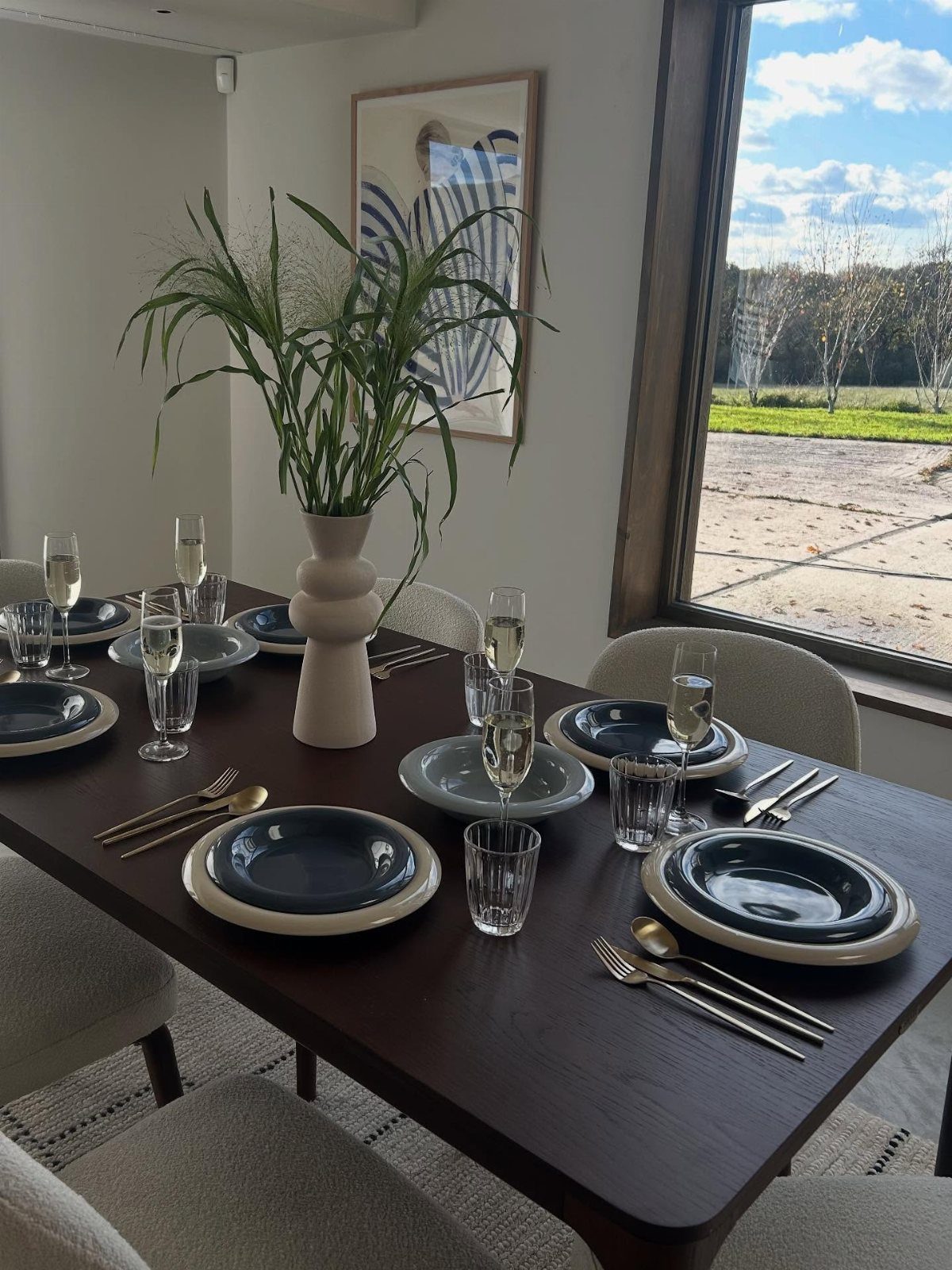
A dark wood table makes a dinner setting look finished before anyone sits down. Light-colored or colored dishes show up best on it, and blue plates are a smart pick because they stand out against the brown.
Keep the centerpiece small and green, like a white vase with a few stems, so the surface stays open for serving. Near a big window, a dark top also gets plenty of daylight to lift it.
3. Dark Wood Cabinets
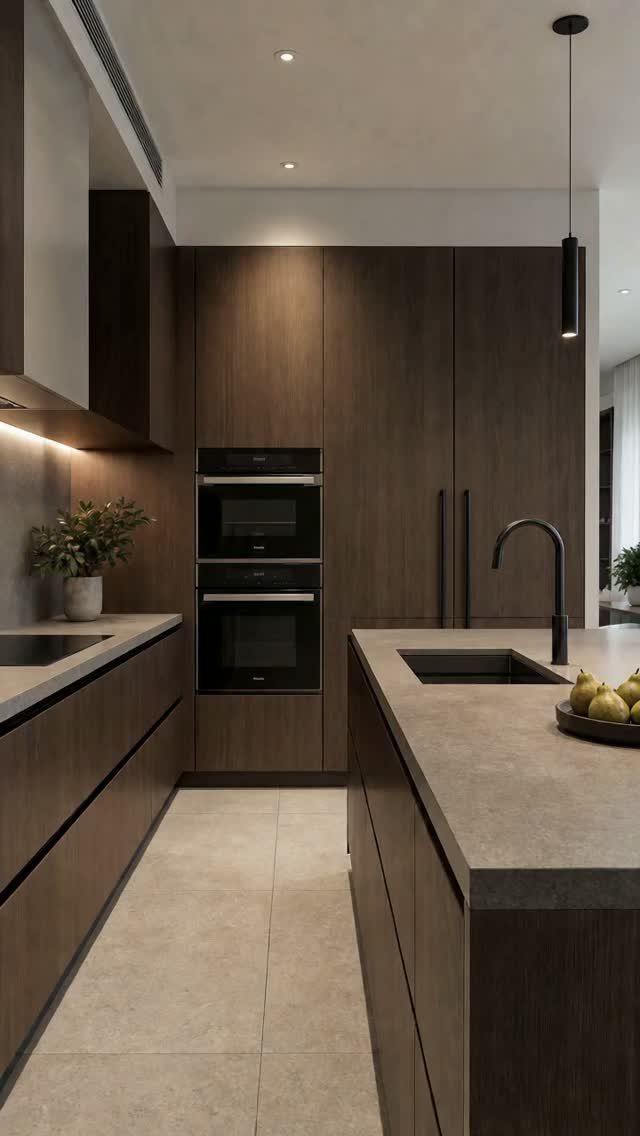
Natural wood cabinets are trending, and a dark brown finish is the richest version of that. In a kitchen like this, I would keep the countertop plain, with grey stone letting the grain do the talking.
Using the same wood on the island and the wall cabinets ties the room together. Keep hardware and lighting minimal, such as a simple black pendant, so the cabinets stay the focus.
4. Dark Wood Flooring
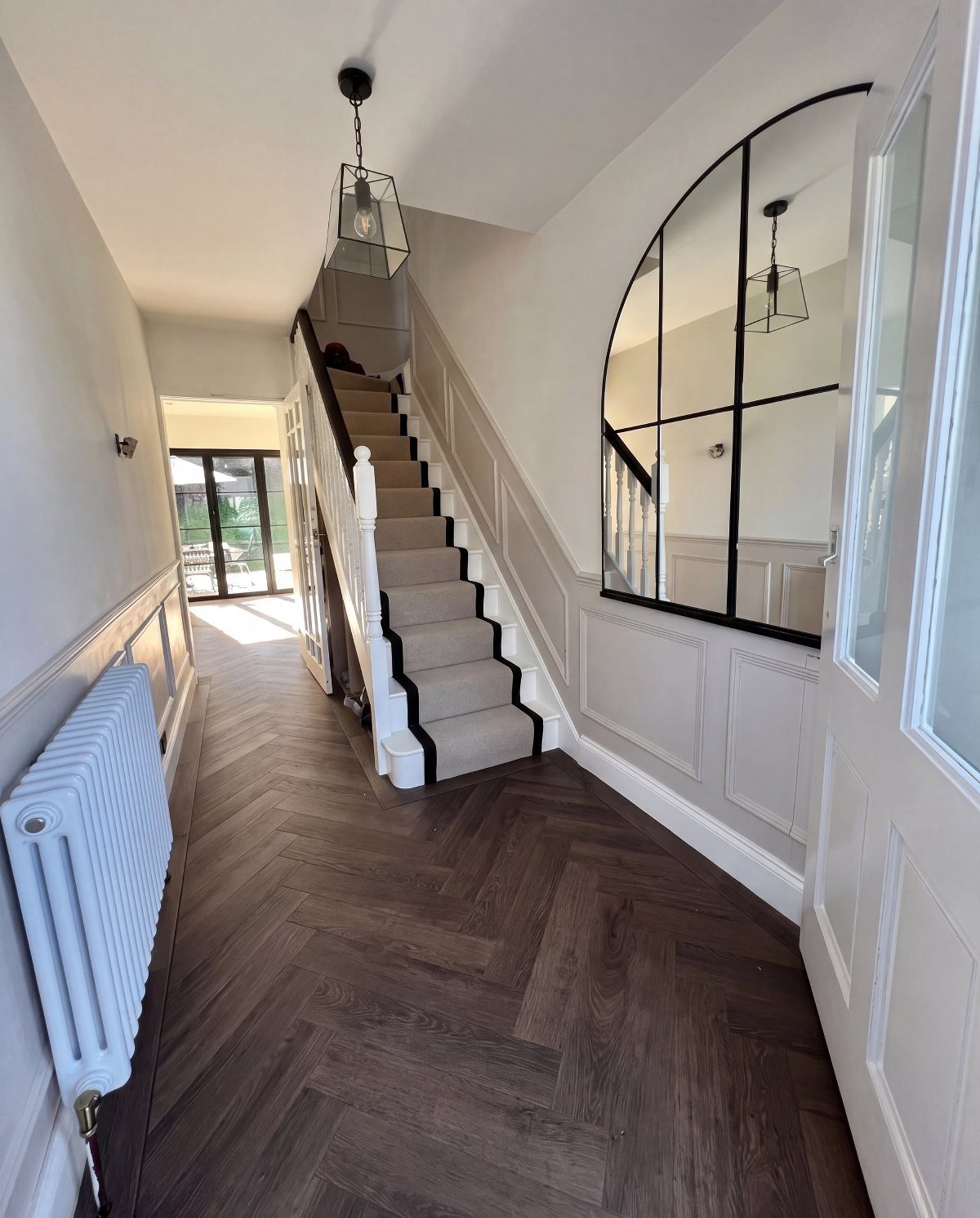
Dark wood floors add warmth and sophistication, and herringbone pushes that further by adding pattern without any extra color.
White wainscoting along the lower half of the wall bounces light back toward dark floors, which keeps a narrow hallway from feeling closed in.
For an entry that should feel substantial, dark wood is the floor that does it.
Herringbone costs more to install than straight planks, so in a budget project a dark plank floor with the same white walls gets you most of the look.
5. Dark Wood with Light Walls
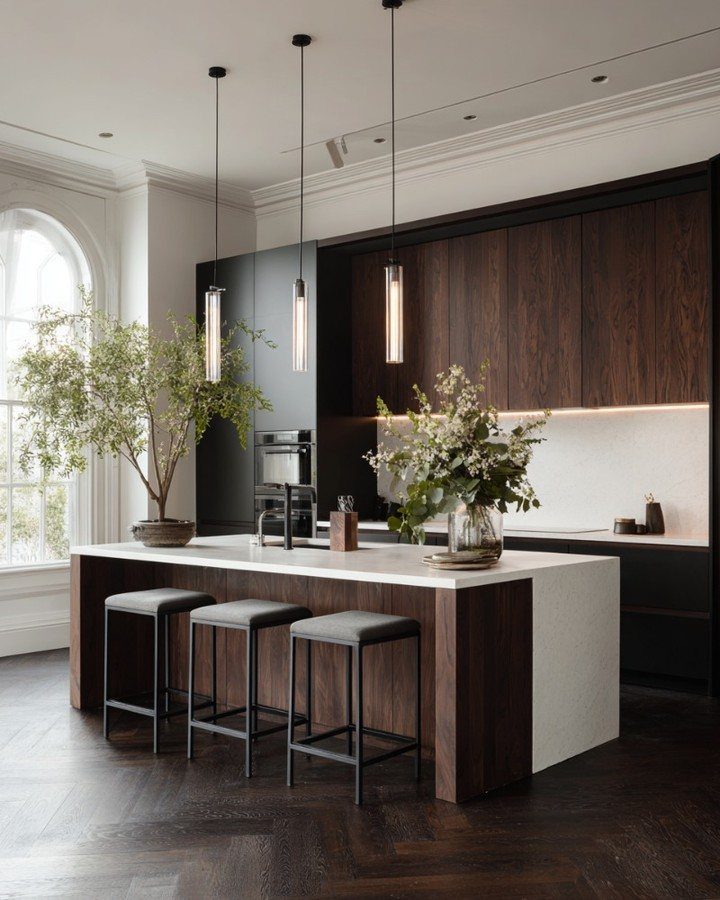
Clean white walls give dark cabinets room to stand out, and the contrast makes a kitchen feel crisp rather than heavy. A white countertop on the island repeats the wall color so the dark wood doesn’t take over.
Black stools and pendant lights add a few more dark points to balance the cabinets. A big plant by the window brings in some green, which suits the wood well.
6. Dark Wood Paneling
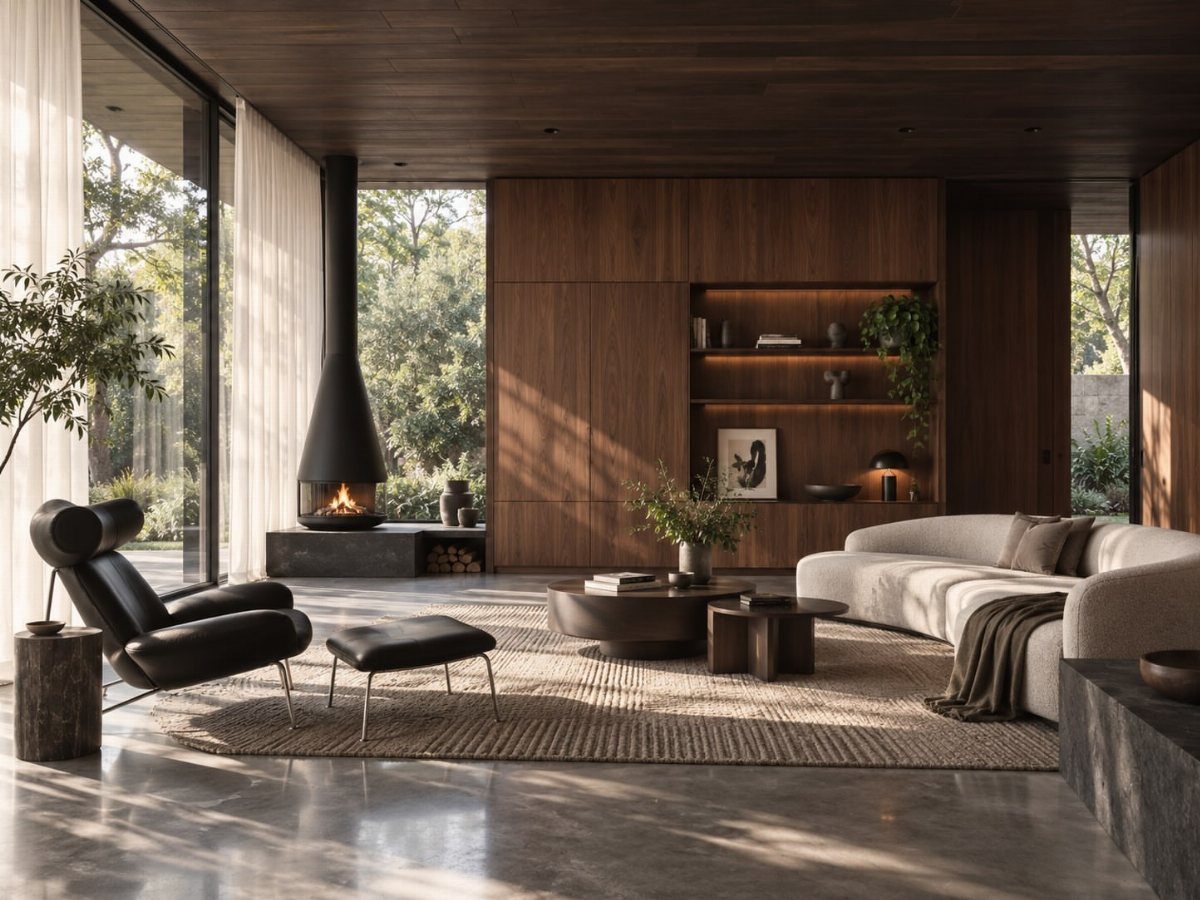
Running dark wood up the walls and across the ceiling wraps a room like a cabin, so it needs the right companions. Large windows help most, since the view of trees outside gives the wood daylight and a green counterpart.
Keep the furniture simple: a grey sofa and a black leather chair let the paneling lead. I would choose this for a room with good natural light, because without it the effect turns dim.
7. Dark Wood Home Office
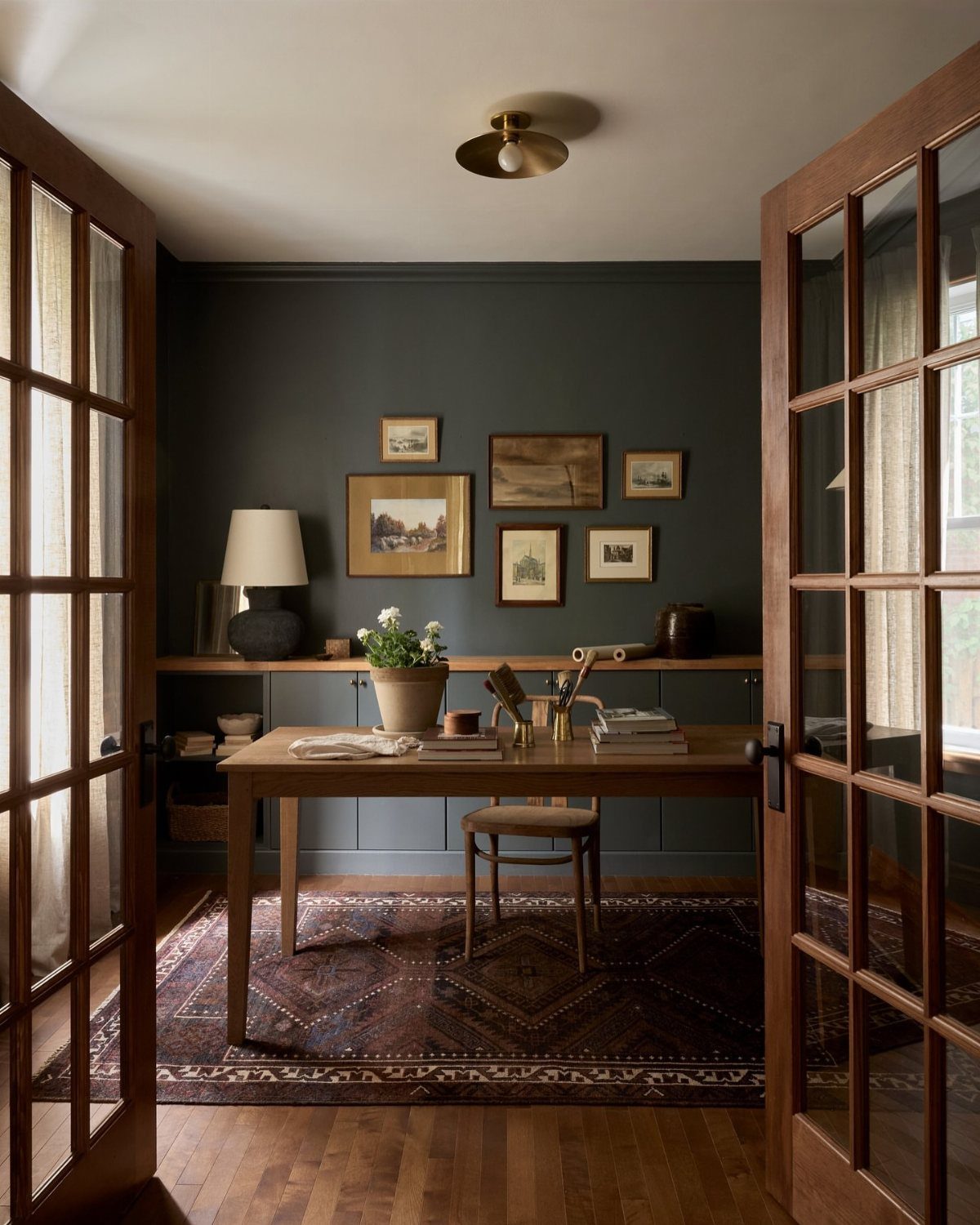
Dark grey walls and a dark wood desk sit close enough in depth that the room reads as one calm, focused space.
French doors in the same wood keep that look going, so the desk, chair and doors all match instead of competing.
A gallery wall helps here, since frames break up a big dark surface. I would add a rug and a lamp to soften the corner, because a lamp gives a dark room a warm pool of light to work under.
Dark Wood’s Aesthetic Appeal
Dark wood adds elegance and warmth, and it adapts to nearly any style, from minimalist to maximalist and from modern to rustic.
That range is why it works in a rental or a first home: one piece can move with you as your taste changes.
Texture matters as much as color here. A dark piece with visible grain adds depth that a flat painted surface can’t, so I would choose grain over gloss when I can.
Durability of Dark Wood
Walnut, mahogany and ebony tend to be dense, hard species, so a dark dresser or dining table can stay solid for decades of daily use.
If you plan to keep a piece through several moves, that durability is worth more than a lower price tag.
Lift one corner to feel the weight, then pull out a drawer and look at how the joints are cut.
A heavy piece with solid joints usually holds up better than a light one with a thin dark stain over soft material.
I would also look at the finish, since a dark stain on a solid piece is easier to touch up than a surface that has been laminated.
Trends in Dark Wood Usage
People are moving toward natural materials and warmer palettes, and dark wood fits right into that shift. Using it doesn’t mean painting every wall charcoal or turning the room into a cave.
3 habits keep it balanced. Plenty of light, from a big window or from a few warm bulbs, keeps the wood looking rich instead of heavy.
Set the wood against lighter walls, a pale rug or cream textiles, and the grain stands out more. Then mix textures, such as linen, wool or woven fibers, to add layers around the wood.
Start with one or two dark pieces. If you like them after a month, add more.
Frequently Asked Questions
What colors go well with dark wood furniture?
Warm, deep colors like burgundy, forest green and ochre pair best, because they sit in the same rich family as the wood and nothing fights.
Pale walls, a light rug or cream textiles give the grain some contrast, so it reads as a feature instead of a shadow.
What is really dark wood called?
Walnut, mahogany and ebony are the best-known dark woods.
Walnut has rich chocolate tones, mahogany is reddish-brown with a fine grain, and ebony is deep and almost black. Oak stained a dark shade is another common option, and it adds oak’s durability.
Are dark wood tones on trend?
Yes, and it has been climbing for a while as more people choose natural materials and warm, earthy palettes over cool gray.
It doesn’t require charcoal walls or a cave-like room. Start with one or two dark pieces, and add more if you still like them after a month.
How do you keep dark wood from making a room feel heavy?
Light does most of the work here: a big window helps, and so do a few warm 2700K bulbs placed around the room. White wainscoting or white walls bounce light back, which helps in narrow or small spaces.





