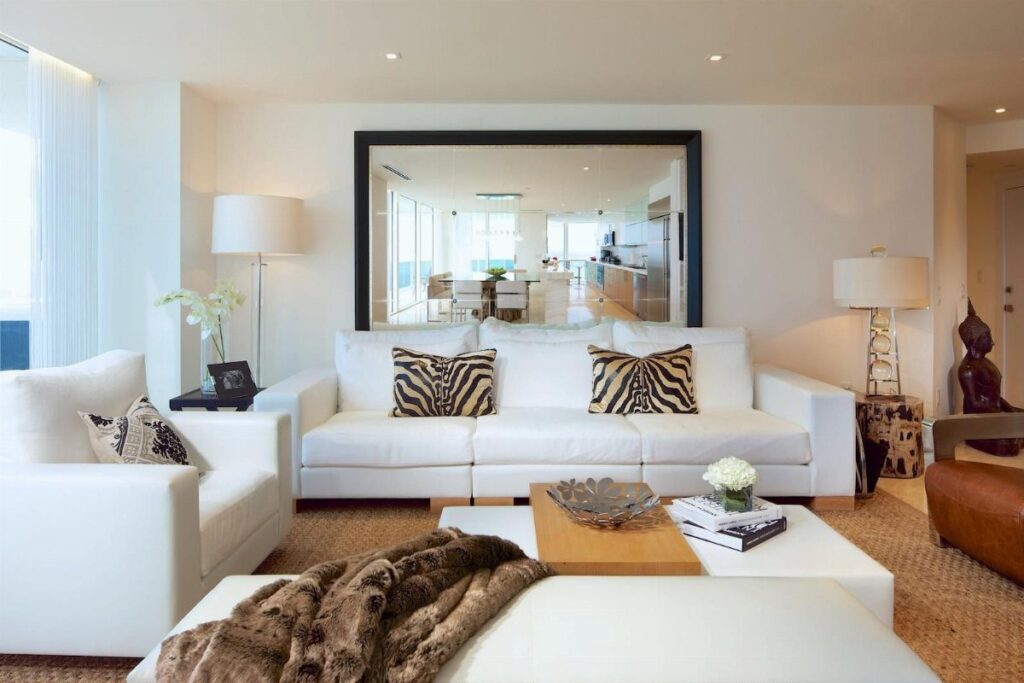
Options here range from a single oversized frame to a full row of four arched mirrors, and from one hanging point to a shelf that needs no extra holes.
Your sofa width settles it: a wide couch can carry one big rectangle, a grid of antique-finish panels or three matching mirrors, while a narrower wall suits a circular mirror in a large frame or an organic, asymmetrical piece.
Measure the sofa before you buy anything, since the 4 Arched Mirrors idea only works when the full row lands close to that width.
1. Large Rectangular Mirror
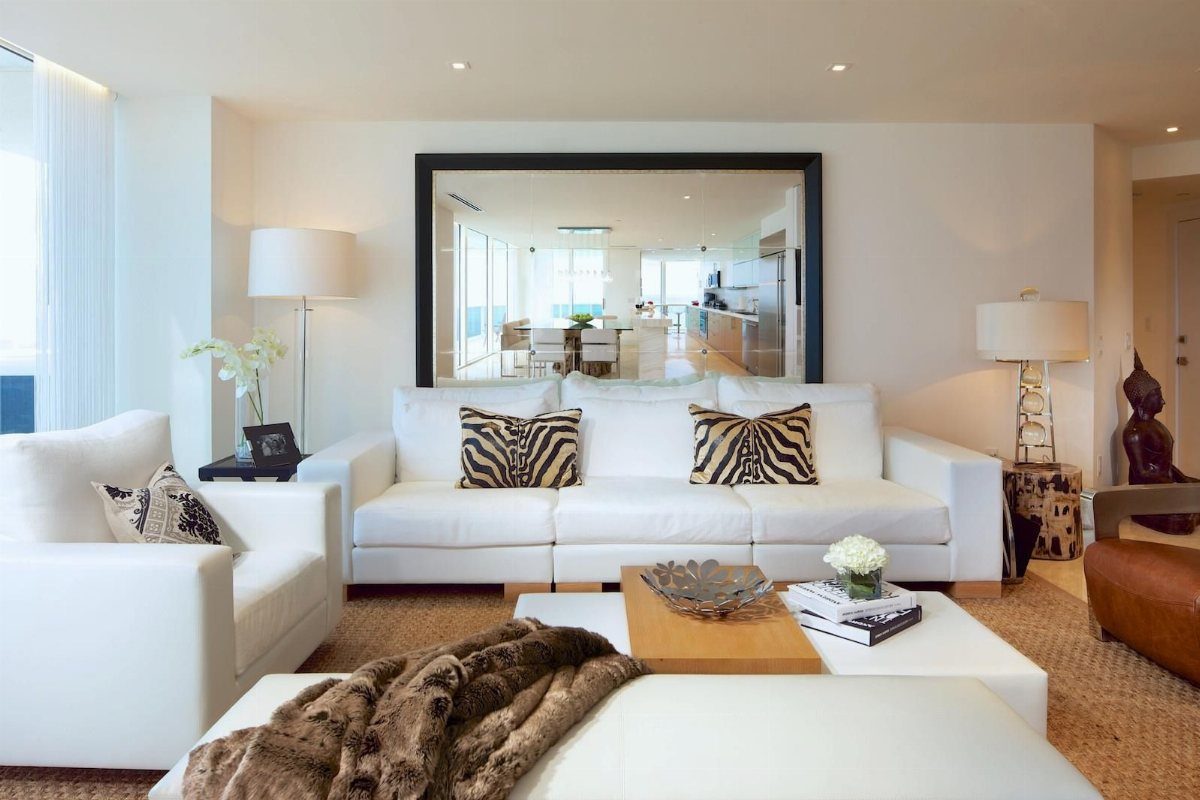
A single oversized rectangle with a thin black frame keeps a sofa wall clean.
White sofas and a plain wall let the frame act as the only dark line in the room, so I would skip any other art around it.
Hang it centered on the sofa, with the bottom edge a hand’s width above the cushions.
An oversized mirror on a budget is easier to find as a plain frameless or thin-framed piece than as a heavy one, and it also reflects whatever sits across the room, so check that view before you drill.
2. Circular Mirror in Large Frame
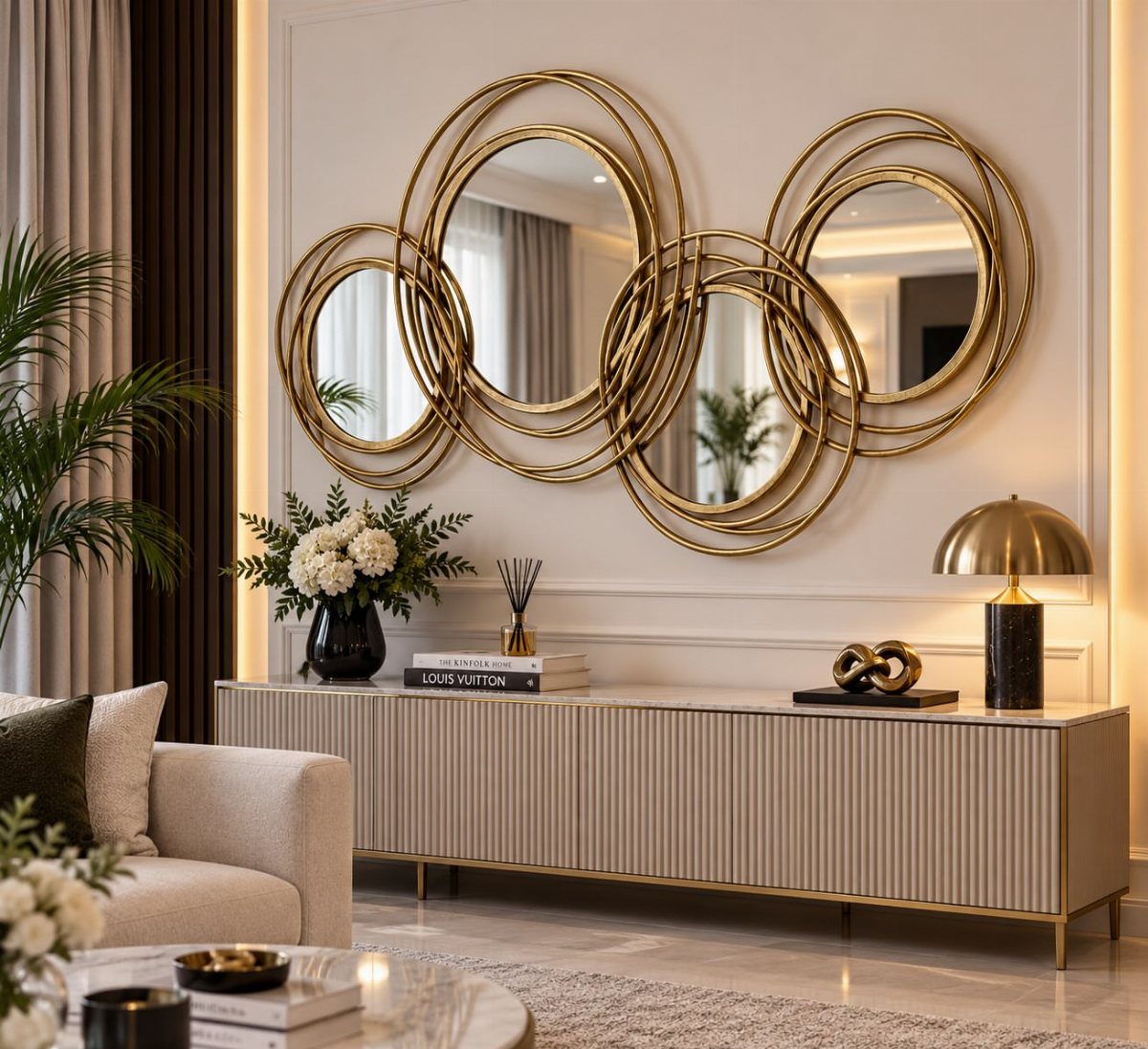
Gold circles that overlap read as one sculptural piece, which is why I like this idea for a wall that feels bare. 4 interlocking rings over a low sideboard give the frame the starring role.
Tape paper circles to the wall first and shuffle them until the overlap looks right. Center the cluster over the furniture below, then go easy on the shelf styling, since the gold already does the talking.
3. Three Matching Rectangular Mirrors
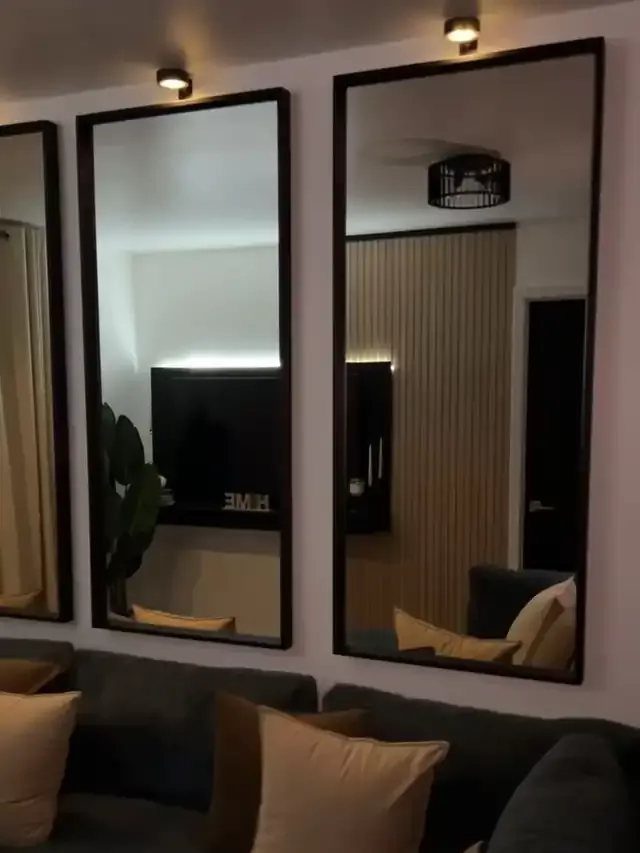
Three tall black rectangles in a row are easier to live with than one huge mirror, because you can buy them in a standard size and match them without custom work. Over a grey couch they stretch the wall upward.
Keep the gaps between frames equal, a few inches is plenty, and cut paper templates to mark each hanging point before you touch a drill. Level the tops, not the hooks.
4. Grid of Antique-Finish Mirrors
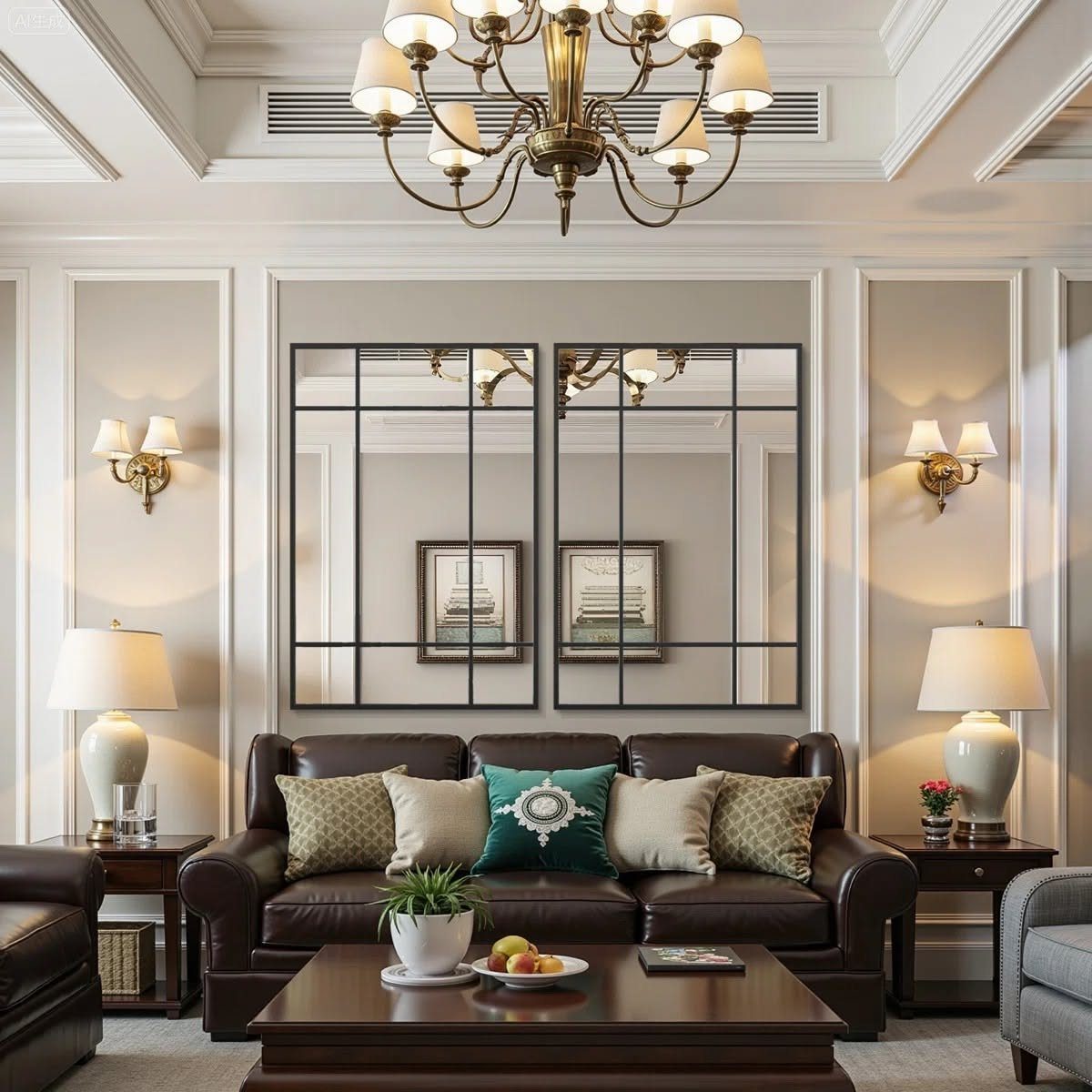
Grid-framed mirrors act like a window pane on the wall, and black muntins look sharp against white paint and a leather sofa. 2 large panels side by side cover a wide couch without crowding it.
Hang them with a narrow gap between them so they read as a pair. I would pick a thin black frame over a chunky one, because the grid lines already add plenty of visual weight.
5. Ornate Mirror with Plates
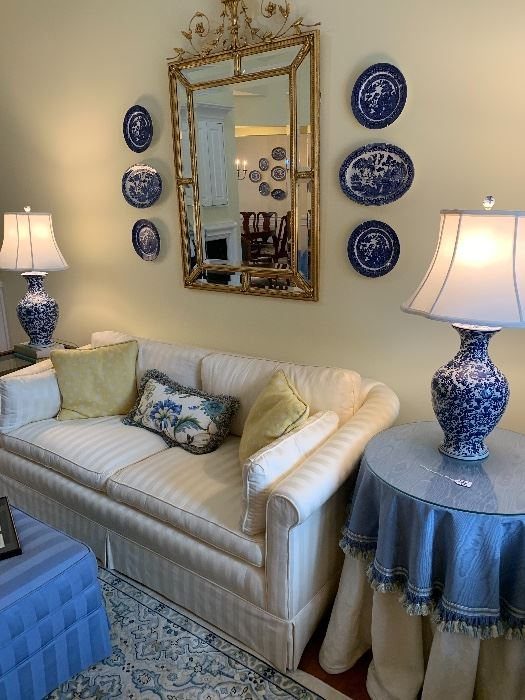
A gold ornate mirror turns into a gallery piece once blue and white plates ring it. The mirror anchors the group, and the plates fill the wall around it so nothing floats alone above the sofa.
Lay everything on the floor first, mirror in the center, and arrange plates until the outline feels balanced.
Use plate hangers, which are cheap, and trace each plate on paper to mark the wall. Echoing the plate colors in lamps ties the whole wall together.
6. Four Arched Mirrors
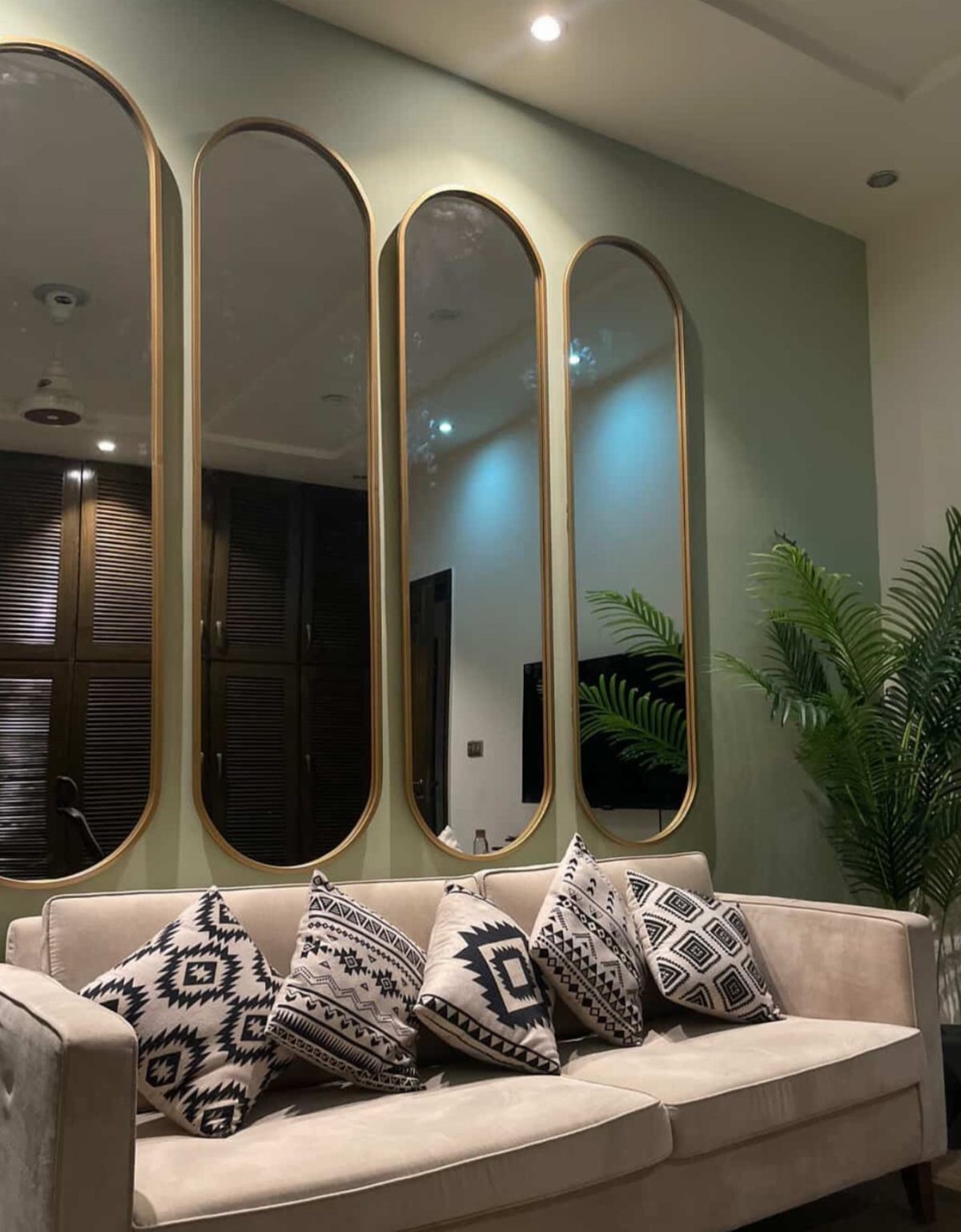
Four tall arched mirrors in gold frames, set side by side, turn a green wall into a row of doorways. The arches soften the straight lines of the sofa, and the gold pops against the paint.
Hang them in a tight, even row, with the tops level and the spacing identical.
This is a bigger investment than a single mirror, so I would measure the sofa width first and let the full row land close to it.
7. Organic Asymmetrical Mirror
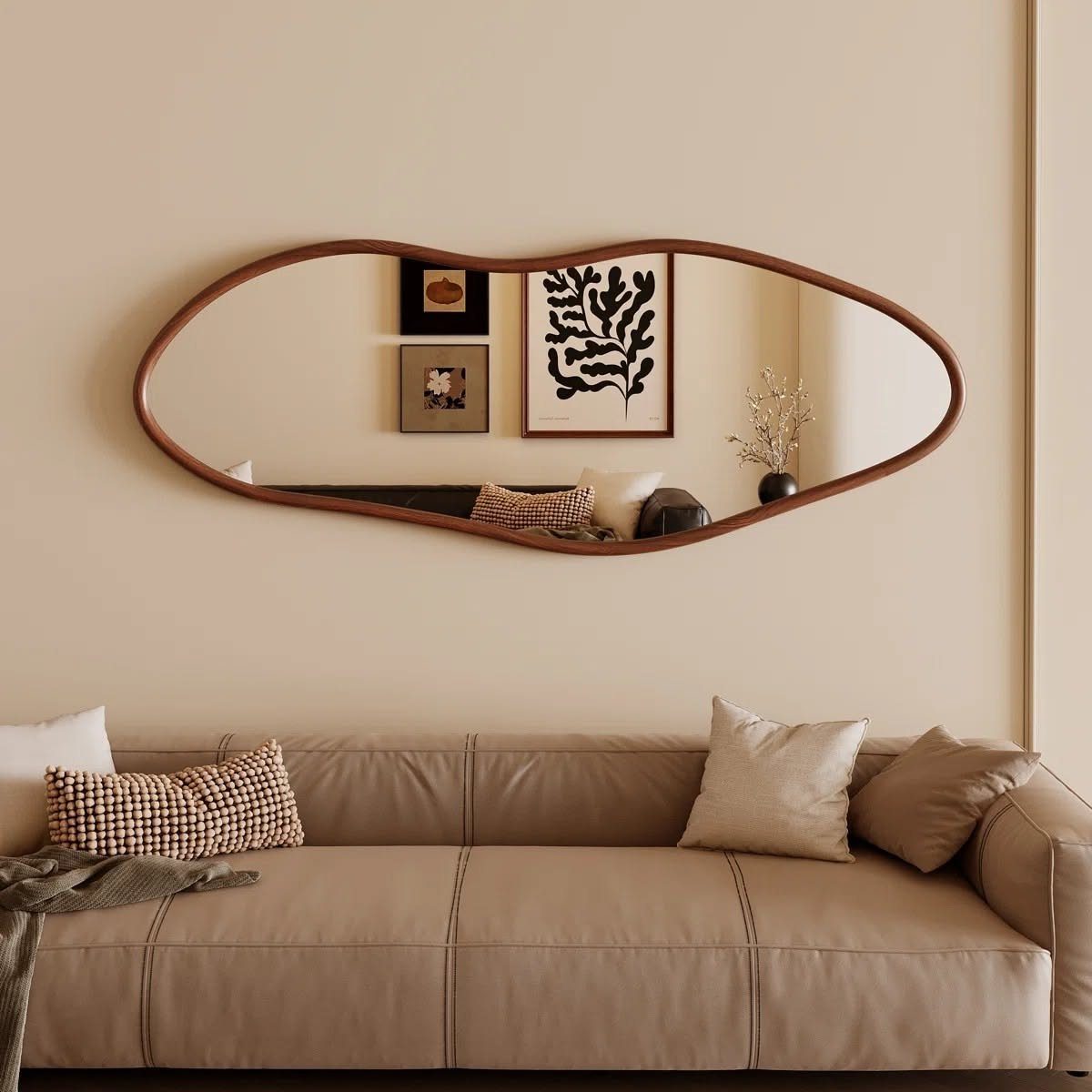
A mirror with soft, uneven edges and a brown frame breaks up the straight lines of a leather sofa, which is why I like it over tan leather and beige paint.
The shape does the decorating, so pillows can stay simple.
Center it over the couch, even though the outline looks lopsided. Cut a paper template of the mirror, tape it up, and step back before you drill, because an irregular shape can look off-center when the wall is measured correctly.
8. Mirror on Floating Shelf
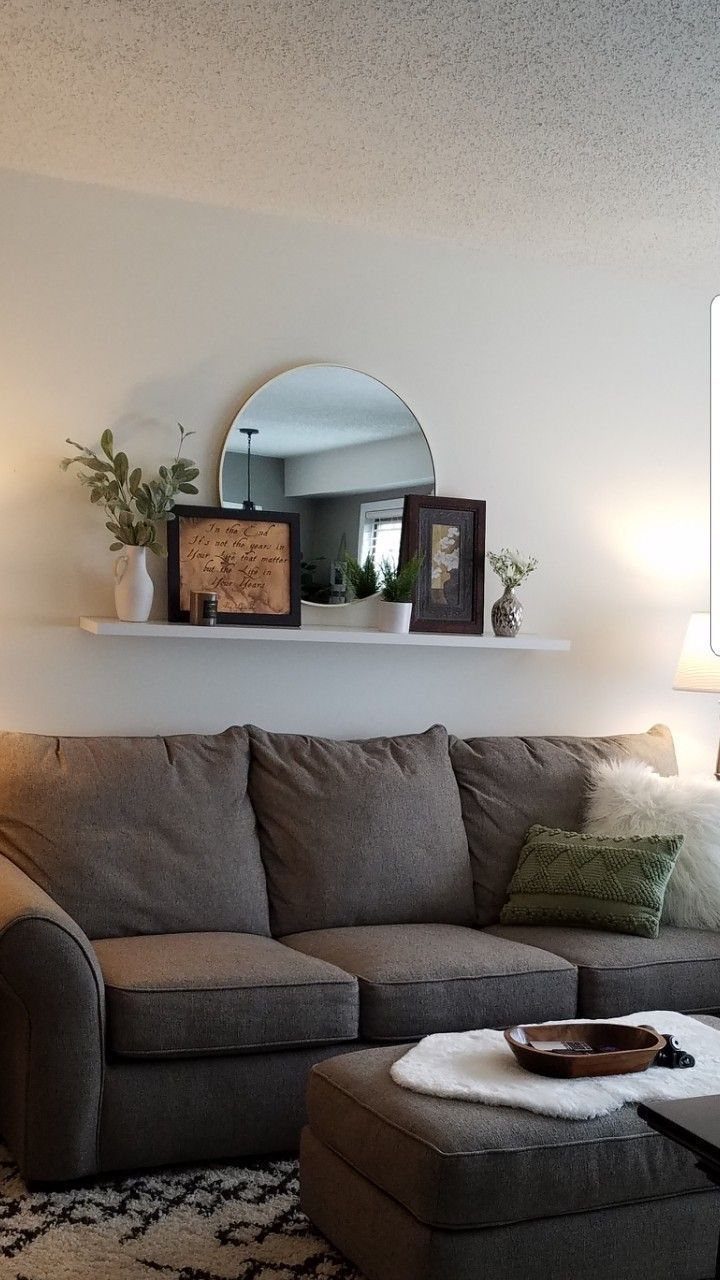
A white floating shelf lets a small semi-circular mirror share the wall with a framed quote, a small picture and 2 vases of greenery.
On a grey couch, that looks lighter than one big mirror, and you can swap pieces whenever the mood changes.
A shelf also means no extra holes for each frame.
Mount it into studs, or use anchors rated for the load, since glass, frames and vases add up. I would lean the mirror at the back and stagger the heights of everything else.
Decorative Styles
A mirror above the couch works in nearly any style, and the frame does most of the style-setting.
Match the frame to the look of the room: a sleek, thin frame suits modern, a long angular piece reads clean and contemporary, and a round ornate mirror brings in a more traditional note.
For modern farmhouse, I would pick a frame that feels like a natural material or a plain black line, then let the mirror’s job be light.
Hung across from a window or lamp, a mirror bounces daylight deeper into the room, and the extra depth makes a small living room read bigger than its square footage.
That matters most in a small space. Hanging one behind the couch opens up the wall without taking any floor space, which is why it suits renters.
Before buying, hold your style choice against the sofa.
Plus, you have the option of what style of mirrors will best fit your personal style. Place a long angular mirror over the couch, or try a round ornate mirror instead.
Frequently Asked Questions
How far above a couch should you hang a mirror?
Leave about 6–12 inches between the sofa back and the bottom edge of the mirror. Hung that close, the mirror reads as part of the seating instead of floating on the wall.
How big should a mirror be over a console table?
Aim for a mirror that spans roughly 60–75% of the width of the furniture below it.
A wide rectangle in a slim frame suits a long wall, since it fills the space without crowding it. For a gold circle cluster over a low sideboard, center the whole group over the piece so it lines up.
How do you hang a mirror over a couch so it looks centered?
Center it on the sofa, then test the spot with a paper template taped to the wall before you drill.
Step back and look from across the room. An irregular or organic shape can look off even when the measurements are right, so trust the template and your eye together.





